
LEGO 72051 Donkey Kong Arcade Turns Barrel-Jumping into a Working Display
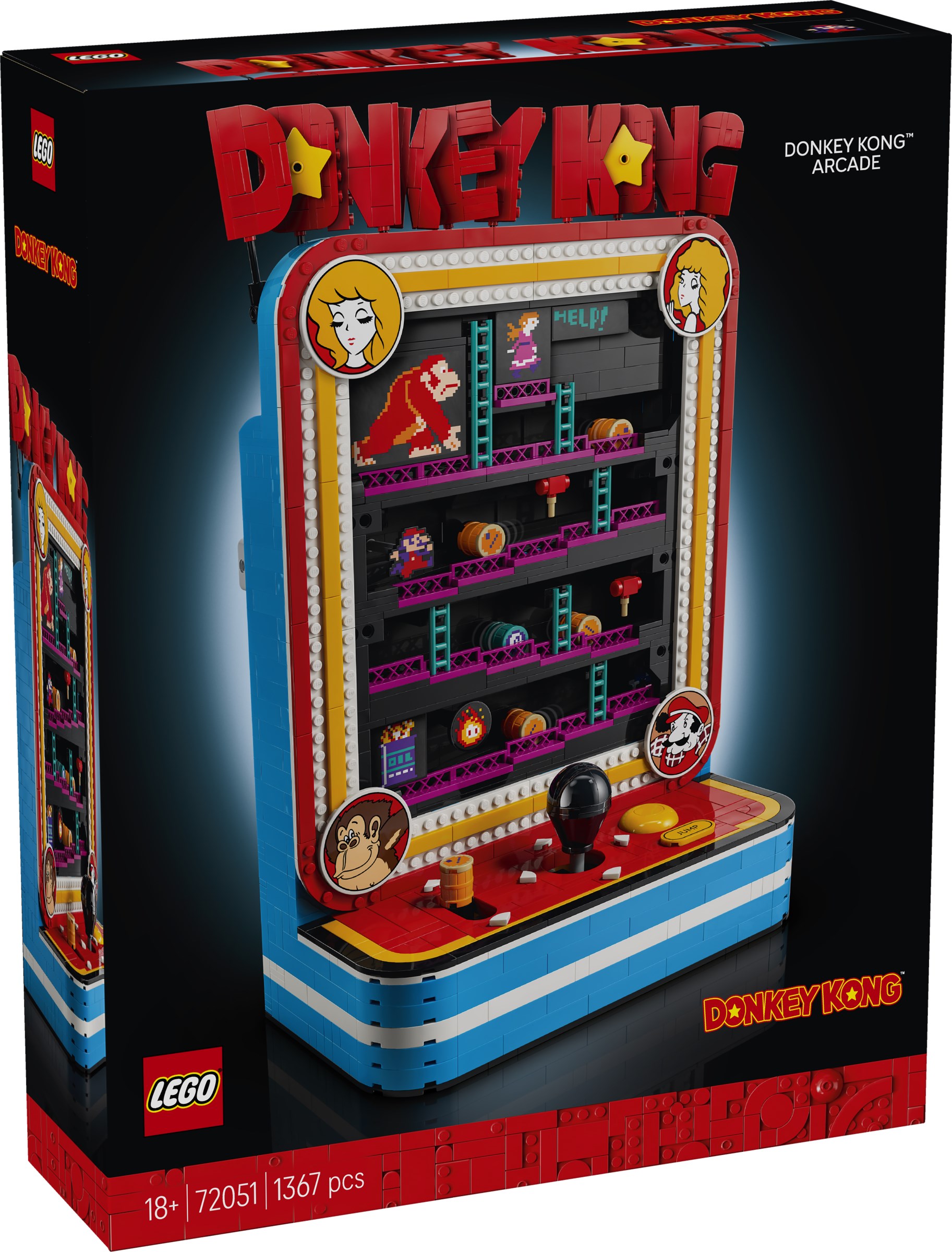
LEGO 72051 Donkey Kong Arcade turns the first Donkey Kong video game into a playable brick-built cabinet, complete with the sloping scaffold, ladders, rolling barrels and hammer that define its opening stage. The 1,367-piece LEGO Super Mario set is designed for ages 18+ and launches on 1st August. More than a static gaming tribute, it uses a lever, joystick and button to recreate the chase between Donkey Kong and Jumpman while Lady waits at the top.
That combination gives the model a clear identity among large gaming displays. The cabinet provides the recognisable silhouette, but the open playfield is where the set earns attention: the machinery is visible enough to invite a demonstration, and the characters turn the façade into a compact story rather than a decorated box.
LEGO 72051 Donkey Kong Arcade Quick Facts
| Set number | 72051 |
|---|---|
| Name | Donkey Kong Arcade |
| Theme | LEGO Super Mario |
| Pieces | 1,367 |
| Age | 18+ |
| Release date | 1st August |
| Main build | Donkey Kong arcade cabinet with playable action |
| Characters | Donkey Kong, Jumpman and Lady |
| Confirmed functions | Barrel-release lever, movement joystick and jump button |
The Arcade Screen Becomes the Build
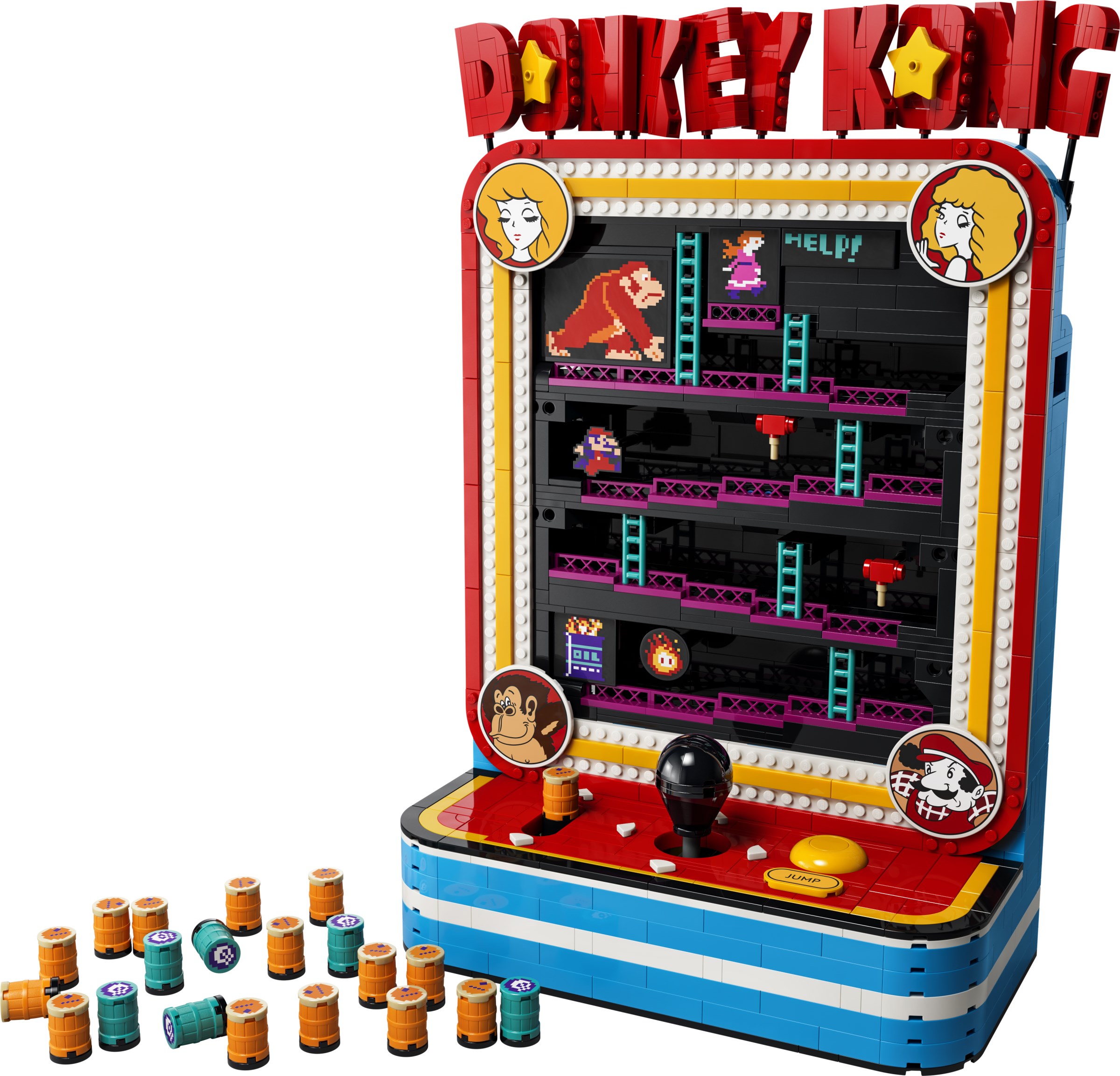
The strongest design choice is to treat the game screen as a physical stage. Sloped scaffold levels create the familiar zigzag route, while ladders break up the red framework and give Jumpman a readable path towards Lady. Donkey Kong occupies the upper area, so the three characters establish the challenge immediately even when none of the controls are being used.
The hammer matters as a small but essential prop. It gives the scene another unmistakable game reference without requiring printed scenery to explain it. The open structure also suits the subject: a solid back wall would hide the route, whereas the exposed framework keeps barrels, platforms and character positions legible from the front.
Main Build Details: Three Controls, One Barrel Run
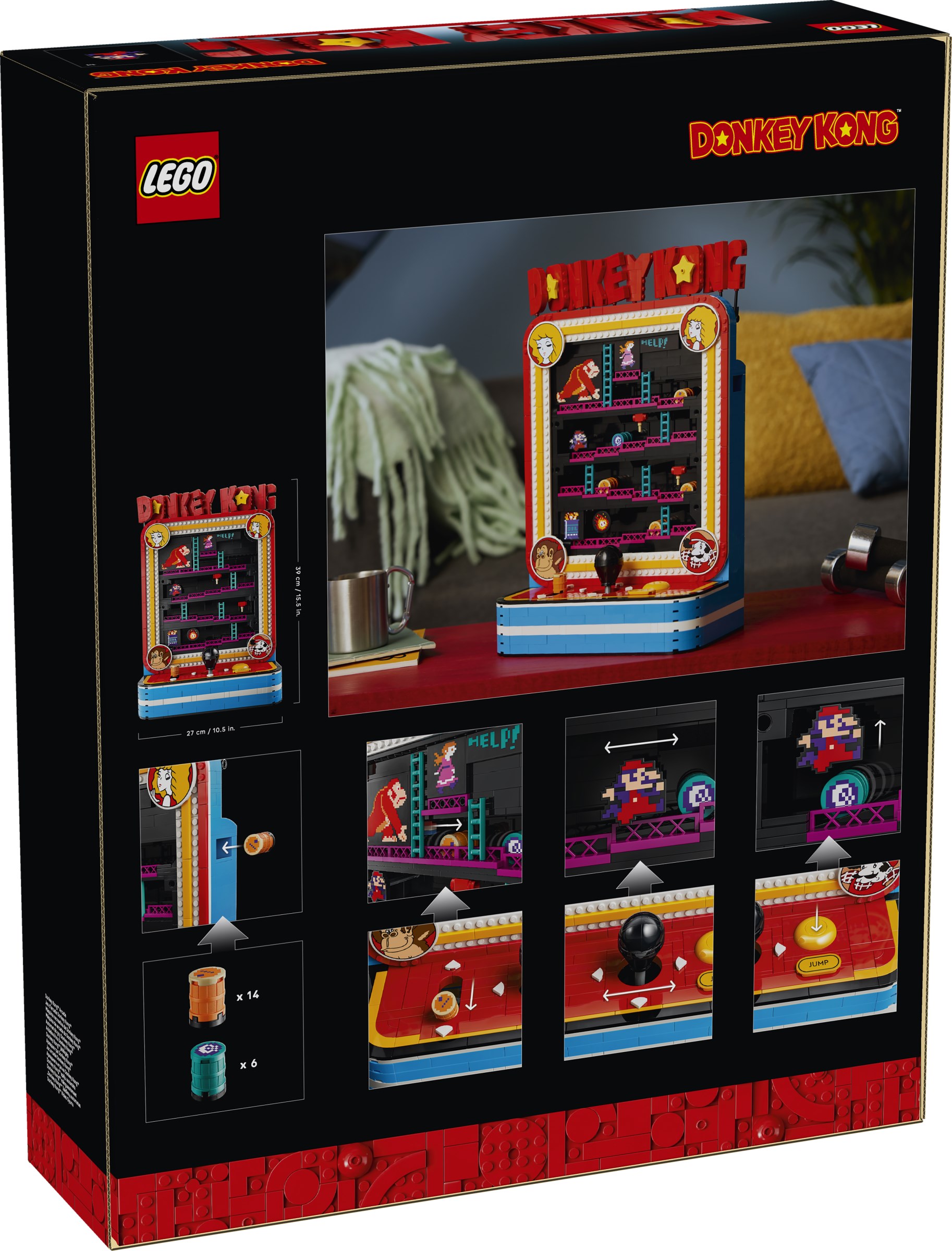
The play sequence begins with the lever, which releases one barrel at a time as though Donkey Kong has thrown it down the course. A separate joystick moves Jumpman along his route. Pressing the button makes him leap, turning the moving obstacle into a simple timing challenge instead of a purely decorative feature.
Separating those actions is a clever fit for an arcade cabinet. One control governs the hazard, another positions the hero, and the button handles the signature jump. That gives two people an obvious way to interact with the model together, while a solo builder can set up a barrel and test the mechanism in short bursts. When the movement stops, the angled platforms still preserve the sense of upward momentum.
Builder's Perspective: Designing Around Reliable Motion
For builders, the interesting question is how the internal linkages fit behind a shallow playfield without disrupting the cabinet profile. The scaffold needs enough support to stay square, yet the moving sections must remain free. That balance between rigidity and clearance is likely to be more instructive than the outer shell alone.
The barrel feed also creates useful lessons for custom mechanisms. A controlled single release depends on spacing, gravity and a clean path; adding too many decorative studs to the slopes could interrupt the roll. Likewise, Jumpman's travel and jump need room around the figure. Anyone extending the model should test the mechanism after each change rather than finish the scenery first.
Colour does structural work here too. Red girders outline the route, blue ladders interrupt the diagonals, and the character colours form focal points at different heights. A wider MOC can preserve that clarity by keeping new background details darker or more neutral than the playable lane.
Display and MOC Ideas Beyond the Cabinet
A black tiled gaming-controller plinth would give the model a clean footprint while leaving the controls accessible. Add a small brick-built token tray beside the cabinet for an old-school arcade detail, or create narrow neon light strips above it using transparent tiles without covering the original stage.
For a larger arcade corner, place a second custom cabinet shell alongside the model and connect both with a patterned carpet strip. A high-score board on a small monitor could display Jumpman, Lady and Donkey Kong names or pixel-inspired icons. Builders who want to expand the game itself could add a detachable lower scaffold module with an extra ladder and barrel parking bay, provided it does not interfere with the existing release path.
The set also lends itself to a workshop display. A cutaway workshop platform behind the cabinet could show spare barrels, a tool rack for the hammer and exposed mechanical linkages. Finally, a shallow red-and-black nameplate base would suit a single-shelf presentation while echoing the scaffold colours rather than introducing unrelated scenery.
Final Thoughts: A Gaming Icon with a Mechanical Point
LEGO 72051 Donkey Kong Arcade succeeds when viewed as a working scene rather than simply a miniature cabinet. Its visual references are strong enough for display, but the barrel release and Jumpman controls give the build a reason to be handled after it reaches the shelf.
The most promising MOC direction is therefore not to surround it with a huge diorama. A precise base, arcade props or a carefully tested extension can strengthen the original idea while keeping the playable route clear. For retro-game fans who enjoy mechanisms as much as recognisable shapes, this is a focused bridge between display model and tabletop challenge.
FAQ
When is LEGO 72051 Donkey Kong Arcade released?
The confirmed release date is 1st August.
Which characters are included in the arcade scene?
The model features Donkey Kong, Jumpman and Lady.
How does the LEGO Donkey Kong Arcade move?
A lever releases barrels individually, a joystick moves Jumpman and a button makes him leap over the obstacles.
Is LEGO 72051 designed only as a display model?
No. It forms a displayable arcade cabinet, but its confirmed controls also recreate the barrel-running and jumping action of the game.