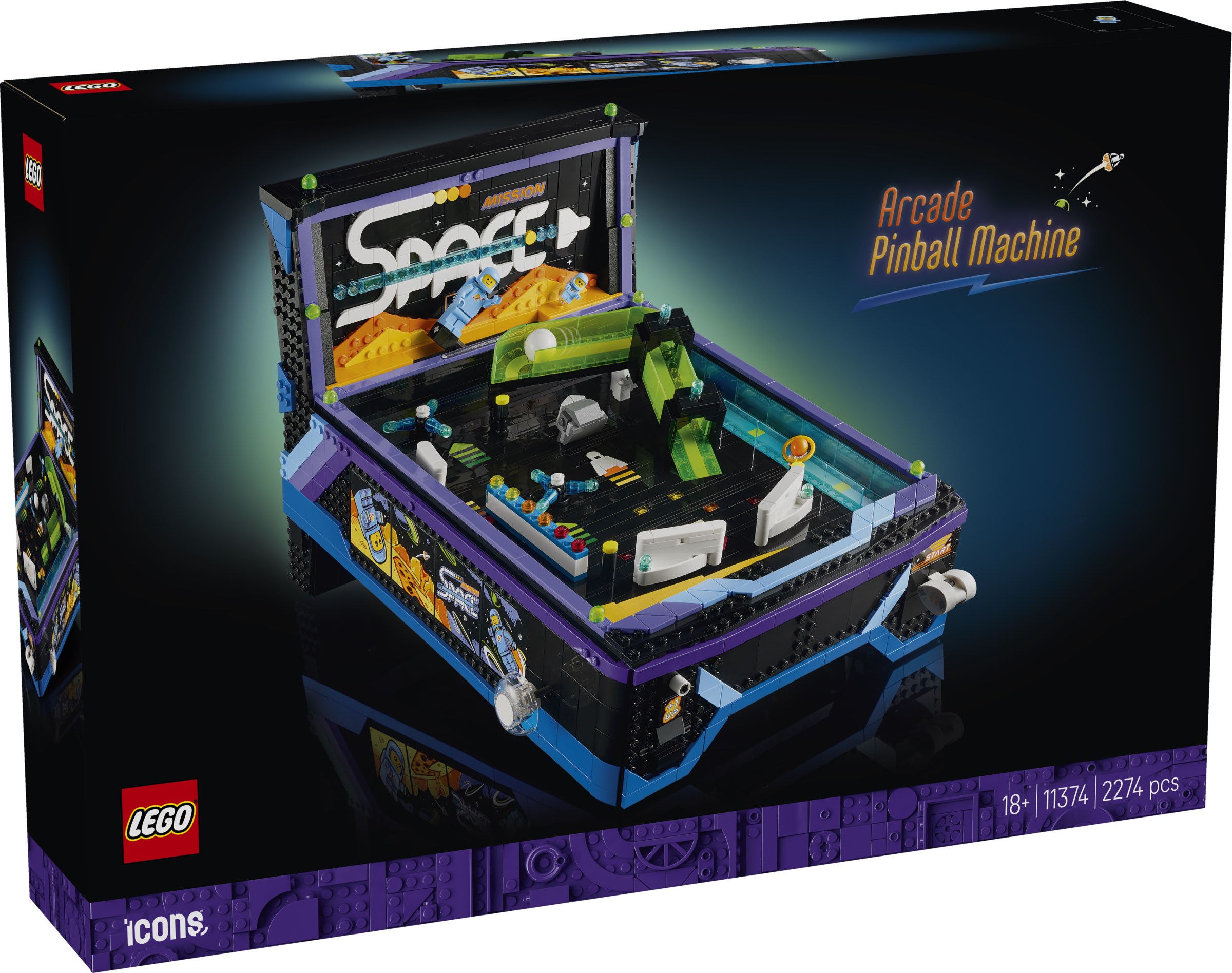

LEGO 11374 Arcade Pinball Machine - Working Icons Pinball Functions
LEGO 11374 Arcade Pinball Machine turns the Icons line toward a fully playable tabletop arcade build, pairing 2,274 pieces with a Classic Space-flavoured playfield and cabinet-style display presence. The model launches on 1st July and is designed for adult builders who want more than a static shelf object. Its strongest hook is the working pinball layout: a spring-powered launcher, dual flippers, spinning bumpers, an up-and-over ramp bridge and a resettable progress bar, all wrapped around a retro space rescue idea.
LEGO 11374 Arcade Pinball Machine Quick Facts
| Set number | 11374 |
|---|---|
| Name | Arcade Pinball Machine |
| Theme | Icons |
| Pieces | 2,274 pieces |
| Age | 18+ |
| Release date | 1st July |
| Main build | Arcade Pinball Machine |
| Minifigures | Classic Space astronaut and baby astronaut |
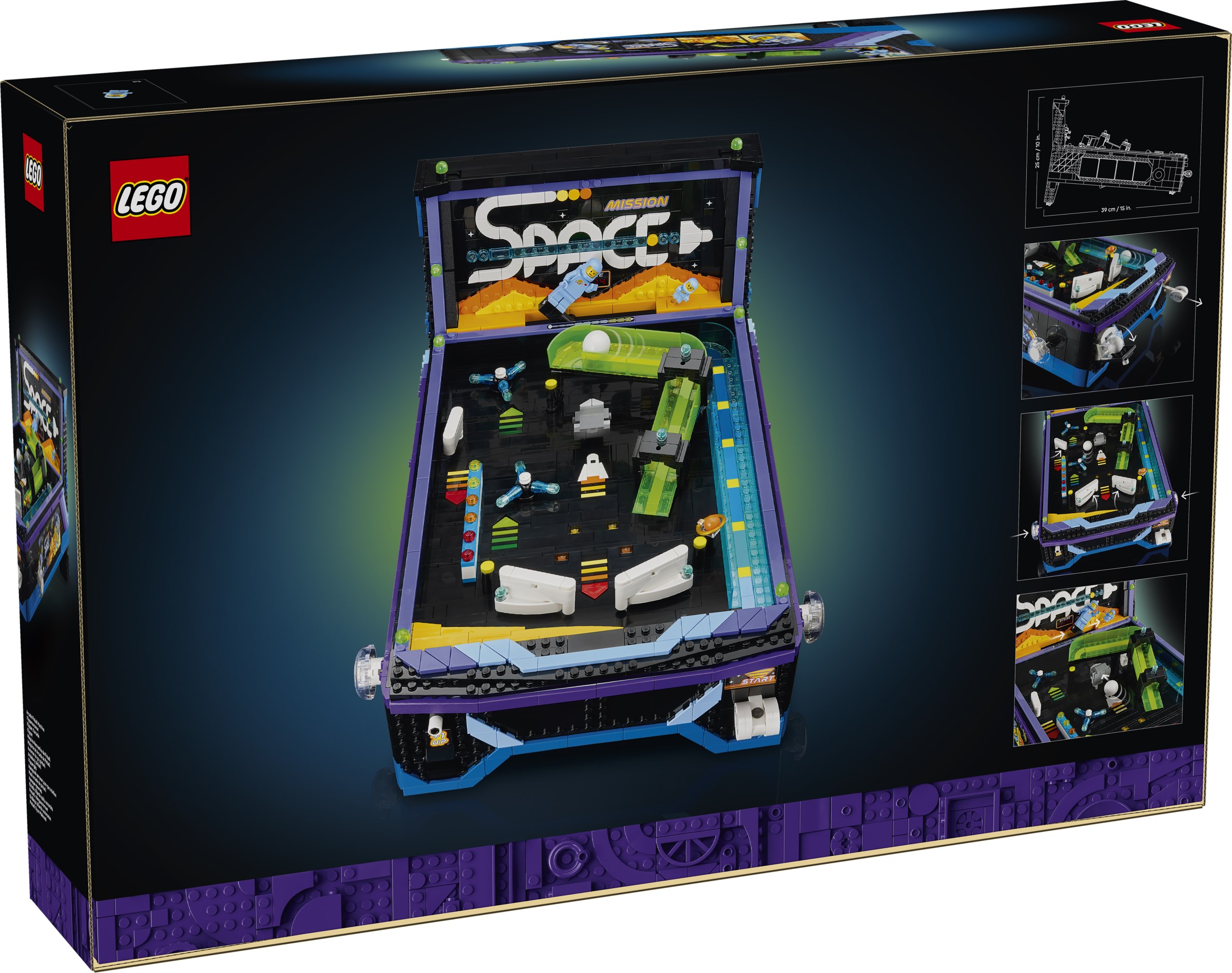
| Main functions | Spring-powered launcher, dual flippers, spinning bumpers, up-and-over ramp bridge, resettable progress bar |
Why This Space Arcade Build Feels Different
The appeal here is not only nostalgia. A pinball machine gives LEGO Icons a subject where the function is the model. The cabinet can sit like a display piece, but the playfield asks to be pressed, launched and tested, which makes the build feel closer to a mechanical desk toy than a conventional adult-display set.
The Classic Space styling gives the action a clearer identity. The astronaut-and-space-baby rescue mission gives the playfield a story target, while the retro arcade shape gives builders an object that reads quickly from the front. That combination is useful for display because visitors can understand the theme without needing a long explanation.
Cabinet, Playfield and Pinball Action
The main build is a tabletop pinball machine with a vertical cabinet profile and an angled play surface. The spring-powered launcher starts the game, while the dual flippers give the model its essential pinball rhythm. Spinning bumpers and the ramp bridge add movement across the board, so the finished build should have several points of interaction rather than a single gimmick.
The resettable progress bar is a smart detail because it gives repeat play a built-in score or mission structure. The space rescue target also matters: it turns the playfield from a plain collection of obstacles into a small story scene, with the astronaut trying to reunite with the baby astronaut through successful shots.
Builder's Perspective: Engineering a Playable Tabletop Game
For builders, the most interesting challenge is structure under pressure. A display cabinet can be decorative, but a working pinball layout needs flippers, bumpers, ramps and launcher tension to survive repeated use. That puts the emphasis on sturdy internal bracing, clean axle alignment, smooth ball paths and panels that do not flex when the controls are pressed.
The second angle is shape. Pinball machines have a very recognizable wedge-like table profile, so the cabinet needs enough height at the back, enough openness on the playfield and enough graphic surface to feel like an arcade object. The Classic Space color cues and printed or stickered panel areas should help the model hold its identity even when viewed from a shelf.
The parts value is also different from a pure display model. Builders interested in kinetic MOCs can study the launcher, flipper linkages, bumper construction, progress-bar mechanism and ramp geometry. Those ideas translate neatly into carnival games, sci-fi control panels, custom arcade cabinets and smaller interactive displays.
Display and MOC Ideas for a Space Arcade
Build a compact arcade corner around the machine with a tiled floor, wall posters, neon light strips and a small queue line so the model feels like part of a game room rather than a lone cabinet. Keep the side scenery low enough that the playfield remains visible.
For a Classic Space layout, place the pinball machine beside a moon-base console, a small landing marker and a transparent display stand for the astronaut. A black or dark-blue base with grey crater plates can make the arcade theme feel like it belongs inside a space-station rec room.
Lighting is an easy upgrade. Add a backboard glow, small trans-colored target markers or an under-cabinet light strip to make the playfield read better in a display case. A nameplate with the set number and a few score-style tiles would also suit the arcade identity.
MOC builders can go further by designing replacement target panels, a wider spectator platform, a trophy shelf for spare balls, or a modular arcade row with other brick-built game cabinets. The set's best expansions should support the working table rather than hide it.
Final Thoughts on 11374 Arcade Pinball Machine
LEGO 11374 Arcade Pinball Machine looks strongest for builders who enjoy mechanisms, nostalgic display objects and Classic Space references in equal measure. It is not just a spaceship-themed shelf piece; the main attraction is the way the cabinet shape, playfield movement and space rescue story work together.
This should suit adult LEGO fans who like interactive Icons sets, builders who study mechanical functions, and collectors who want a conversation piece for an office, games room or display shelf. The most rewarding setups will leave room to play, because the model's identity depends on motion as much as appearance.
FAQ
How many pieces are in LEGO 11374 Arcade Pinball Machine?
LEGO 11374 Arcade Pinball Machine includes 2,274 pieces.
When is LEGO 11374 Arcade Pinball Machine released?
LEGO 11374 Arcade Pinball Machine launches on 1st July.
What theme is LEGO 11374 Arcade Pinball Machine in?
LEGO 11374 Arcade Pinball Machine is part of the Icons theme.
What functions does LEGO 11374 Arcade Pinball Machine include?
The set includes a spring-powered launcher, dual flippers, spinning bumpers, an up-and-over ramp bridge and a resettable progress bar.
Which minifigures are included with LEGO 11374 Arcade Pinball Machine?
The set includes a Classic Space astronaut and a baby astronaut.