

LEGO 11381 Jaguar E-Type Icons Classic Car Build and Functions
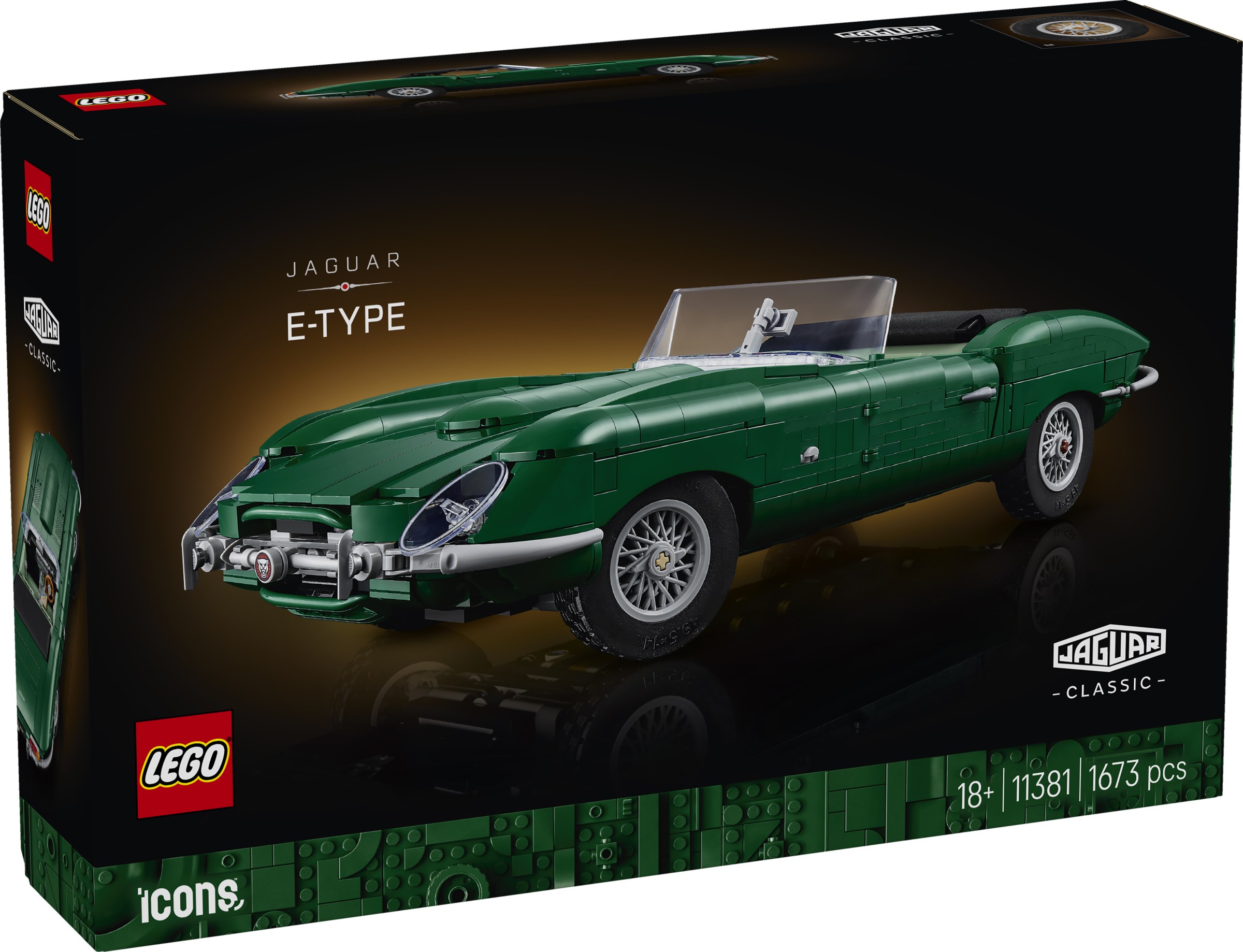
LEGO 11381 Jaguar E-Type brings the landmark British sports car into the Icons line as a 1,673-piece, 18+ display model planned for 1st August. The set recreates the Jaguar E-Type with a classic green body, wire-style alloys, an inline-6 engine under the bonnet, opening doors, a fold-back textile roof, an opening boot with a small toolkit and working steering. For builders, the appeal is not simply that this is another licensed vehicle. It is a long, low, curve-heavy car where the proportions, cockpit access and mechanical details all need to work together on the shelf.
LEGO 11381 Jaguar E-Type Quick Facts
| Set number | 11381 |
|---|---|
| Name | Jaguar E-Type |
| Theme | Icons |
| Pieces | 1,673 pieces |
| Age | 18+ |
| Release date | 1st August |
| Main build | Jaguar E-Type |
| Main functions | Working steering |
Why the E-Type Shape Matters
The Jaguar E-Type is a demanding subject because its identity depends on a very specific stance: a long bonnet, a compact cabin, rounded wheel arches and a rear section that should feel elegant rather than blocky. A LEGO version has to carry that profile before any smaller detail can help. The confirmed green body and wire-style alloys are important because they give the model an immediate period-correct personality, but the real test is whether the finished car reads as low, stretched and graceful from the side.
That makes this set different from a more upright display car. The build is likely to reward slow viewing around the model, especially across the bonnet line, the roof treatment and the transition into the rear. A strong E-Type model should look good parked in profile, angled three-quarter forward and with the bonnet lifted for the engine view.
Bonnet, Cockpit and Opening Details
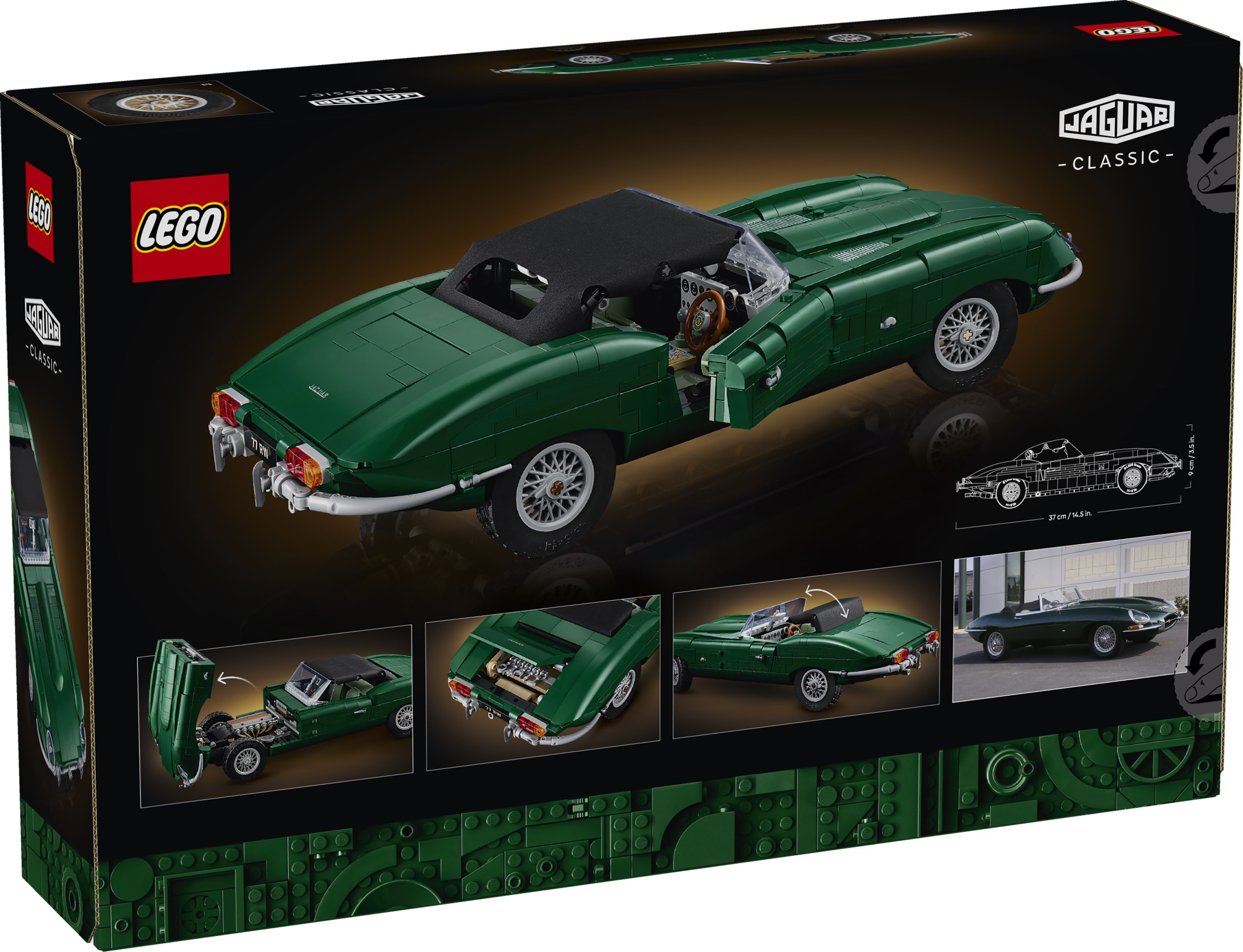
The confirmed functions give 11381 Jaguar E-Type several display modes. The bonnet opens to reveal the inline-6 engine, which is the kind of detail adult car builders usually want because it adds a mechanical focal point without changing the clean exterior. The doors open as well, giving access to the cockpit and its detailed dashboard. That matters on a model where the cabin is relatively small compared with the length of the car.
The fold-back textile roof adds another useful layer. It lets the model shift between a cleaner closed-roadster look and a more open cockpit display. The boot also opens at the push of a button and holds a 5-piece toolkit, a small accessory detail that suits the car's collector-display character. Working steering rounds out the feature list, giving the finished model a practical interaction point while keeping the set firmly in adult display territory.
Builder's Perspective: Curves, Access and Mechanical Story
From a builder's perspective, the most interesting challenge is the bodywork. A Jaguar E-Type is not forgiving: the bonnet cannot feel too tall, the cabin cannot overpower the front, and the wheel placement has to support the long, smooth stance. Builders who enjoy shaping techniques should find plenty to study in how the green panels and slopes are arranged to suggest continuous curves.
The second draw is access. Opening bonnet, doors, roof and boot details make the model more than a sealed shell, so the internal sections need to be tidy enough to reward inspection. That is useful inspiration for MOC builders working on classic cars, where a model can look finished from outside but still feel richer when the engine bay and cockpit have their own visual rhythm.
The third point is display handling. Working steering lets the front wheels be posed slightly off-center, which often makes a vehicle feel more natural in a shelf scene. It is a small function, but on a static car build it can change the whole attitude of the model.
Display and MOC Ideas for a Classic Jaguar Shelf
The cleanest display choice is a simple showroom base: dark tiles, a narrow curb edge, a small nameplate and enough open space around the car to preserve the long side profile. A second option is a British country-road vignette, using a low stone wall, muted greenery and a curved road section to complement the green body without hiding the silhouette.
For a garage scene, add a tiled workshop floor, a rolling tool chest, a wall-mounted parts shelf and a small inspection lamp near the lifted bonnet. The included toolkit gives that setup a natural anchor. Builders who prefer a motorsport angle can create a restrained paddock display with a timing board, spare wheel stand and low pit barrier, keeping the car as the center rather than burying it in scenery.
The textile roof also opens up a nice before-and-after display: one side of the base can show the car with the cockpit open, while a small roadside pull-off or showroom plinth emphasizes the convertible character. Even a thin mirrored backing panel could work well here, reflecting the side curve and making the wire-style alloys more visible.
Final Thoughts
LEGO 11381 Jaguar E-Type looks best suited to builders who enjoy elegant vehicle display models with hands-on mechanical touches. The set has enough confirmed function to make inspection worthwhile, but its real strength is the subject: a classic car where body shape, color, cockpit access and engine detail all matter. For Icons collectors, automotive fans and MOC builders studying curved car bodies, this should be one of the more distinctive display vehicles of the year.
FAQ
What is LEGO 11381 Jaguar E-Type?
It is a LEGO Icons set based on the Jaguar E-Type sports car.
How many pieces are in LEGO 11381 Jaguar E-Type?
The set includes 1,673 pieces.
What age range is LEGO 11381 Jaguar E-Type designed for?
It is marked as an 18+ set.
When is LEGO 11381 Jaguar E-Type planned for release?
It is planned for 1st August.
What functions does LEGO 11381 Jaguar E-Type include?
Confirmed functions and details include working steering, an opening bonnet with an inline-6 engine, opening doors, a fold-back textile roof and an opening boot with a small toolkit.